How to Host a Game Night: Invites, Picking Games, Teaching Rules Fast and Ending Well
By The Rondovo team · Published · Updated · 10 min read
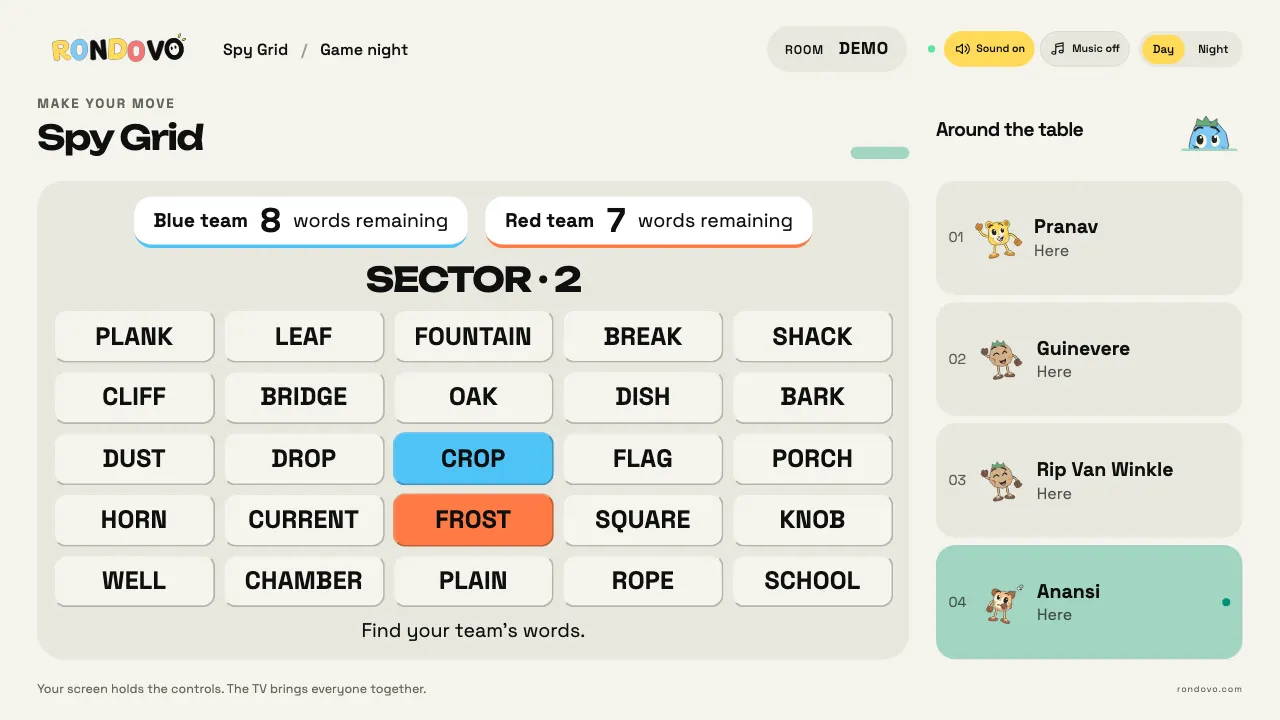
To host a game night, invite a group that fits the games you have (or pick games that fit the group), plan three to five games from short to long to loud, learn the rules before anyone arrives, and keep food off the table. The two things that make or break a game night are choosing games for the actual player count and teaching each game in under two minutes. Everything else, from snacks to decorations, is a bonus. This guide walks through the whole evening in order and ends with a checklist you can print.
In short
- Invite for a number, not a crowd. Six to eight is the easiest size to host. Plan games for the real headcount.
- Plan an arc. A drop in opener, a team game, one main event, a big group finish.
- Learn every rule beforehand. Play a solo practice turn. Reading a rulebook aloud kills the room.
- Teach in this order: how you win, what you do on a turn, one example, start playing.
- Keep a running score across games for a light competitive thread, and a silly prize.
- End while people still want one more.
Step 1: decide the size and the guest list
The guest list decides your games more than any review does.
- 4 to 5 people: one table, almost any modern board game. The easiest night to host.
- 6 to 8 people: the sweet spot for party games such as Codenames, Wavelength and Telestrations. Board games mostly stop at 4 to 5.
- 9 to 16 people: you need team games, games where everyone plays at once, or two tables.
- 16 and up: whole room games only (Mafia, charades, a quiz) or several tables with a rotation.
Mix regulars and newcomers on purpose. One or two people who already love games help carry energy, but a room of strangers and one expert who explains everything is hard work. If you are inviting a mixed group, tell them in the invitation that every game is quick to learn.
What to say in a game night invitation
Keep it short and answer the questions people actually have:
- the start time and a rough end time ("7 until about 10")
- what kind of games ("party games, nothing complicated" or "we are playing Catan")
- whether to eat beforehand or come hungry
- whether to bring anything (a snack, a favourite game, a fully charged device if you plan screen games)
- a reply by date so you can plan the player count
A group chat message is fine. If you like a little ceremony, a themed invitation sets the mood; there are ideas in game night themes.
Step 2: pick games for the group
Choose by player count first, then crowd, then time. Our game night games guide sorts dozens of games exactly that way, so here is just the method.
Plan one more game than you need. Some games flop with some groups, and that is fine. Have a backup that is quick and different.
Build an arc, not a list:
- Drop in game (15 minutes). Something people can join while others arrive: Twenty Questions, Ghost, a shared word puzzle race like Five Letters.
- Team game (20 to 30 minutes). Teams let a nervous guest contribute without being on the spot. Codenames or Spy Grid, Just One, charades.
- Main event (45 to 60 minutes). The game you are most excited about. If it caps at four or five players, split into two tables and give the second table something just as good.
- Big finish (20 to 30 minutes). Everyone in one game, lots of noise: Mafia, Fishbowl, or a writing game like Fill-In.
Match the weight to the newest player. If even one guest has never played a modern board game, skip anything with a rulebook longer than four pages. Save the heavy game for regulars night.
Game night with friends ideas by group
| Group | A night that works |
|---|---|
| Old friends who know each other well | Most Likely To, Wavelength, Mafia |
| New friends and partners of friends | Two Truths and a Lie, Codenames, Fishbowl |
| Board game regulars | Skull, a long main game, Avalon |
| A loud, competitive crowd | Coup, King of Tokyo, then Skull for pure bluffing |
| Three or four couples | Herd Mentality, Codenames with couples split up, Monikers |
| Mixed ages, kids included | Just One, Uno, charades, Ludo |
More ideas for adults in game night ideas for adults, for families in family game night ideas, and for remote friends in virtual game night ideas.
Step 3: set up the room
Clear more table than you think. A board game, cards and drinks need room. Move the fruit bowl, the candles and the mail.
A separate food spot. Put the food on a counter or side table so the game table stays clean. Greasy fingers ruin cards; game night food ideas lists foods that will not.
Seating:
- Chairs at the table for the board game, sofas for party games.
- For team games, alternate teams around the room so whispers are harder.
- Put the strongest explainer next to the newest player, not opposite.
- Couples and best friends sit apart for anything with bluffing. It is more fun for everyone, including them.
For screen games, check the TV, the Wi-Fi name and password on a card, chargers within reach, and the volume. If you use a site where everyone joins with a code, open the room before people arrive and write the code on a sticky note on the TV.
Put on a quiet playlist. Music fills the gaps between turns, but keep it low enough that nobody has to repeat a clue.
Prepare the boxes. Punch out new games, sort the pieces into bags or small bowls, shuffle decks, and set the first game up before the doorbell rings.
Step 4: teach rules fast
This is the skill that separates great hosts from good ones. Learn the game before the night: read the rules, watch a short official teaching video if there is one, and play two practice turns alone.
Then teach in this order:
- The goal, in one sentence. "First to ten points wins, and you get points by building towns."
- What you do on your turn, in one or two sentences.
- One example turn, played face up.
- The one rule people always forget. Say it once, clearly.
- Start. Explain edge cases when they come up, not before.
Two minutes is the target for a party game, five for a board game. If your teach takes longer, play an open handed practice round instead. Nobody remembers rule nine before turn one anyway.
Hand out reference cards or let people read the rules on their own screens if the game has them. On Rondovo every game has a short How to play that each player can open on their own screen in the lobby and again mid game, which spares the host the speech.
Step 5: run the night
Keep score across the whole night. A whiteboard or a sheet of paper on the fridge with every player's name. First place in each game gets 3 points, second 2, third 1. Team games give everyone on the winning team 2. It gives the night a story without anyone taking a single game too seriously.
A prize helps. A cheap trophy, a paper crown, or the right to pick the first game next time.
Keep latecomers in:
- Start with a drop in game so nobody arrives mid rules.
- In team games, add the latecomer to the team that is behind.
- In a board game already running, offer them the next round of the party game, or a quick two player game with the host on the side.
- In browser games, they can join the room with the code for the next game.
Watch the energy, not the clock. If people are flagging during a long game, call a food break or announce "last round". If a game is landing, let it run and drop a later game.
Handle sore losers and rules lawyers gently. Decide rule questions quickly and consistently ("host's ruling, we'll check after"), and move on. Keep the trash talk aimed at plays, never people.
Keep drinks optional. Have good non alcoholic options out next to everything else, and never make drinking part of a game's rules.
Step 6: end well
The best game nights end a little early. Announce the last game twenty minutes before you want people to leave, play something short and loud that everyone is in, then crown the winner of the night's scoreboard.
Before people go, ask the one question that makes the next one better: "What should we play next time?" Write it down. If someone fell in love with a game, tell them where to get it or where to play it free online.
Printable game night checklist
Copy this, print it, tick it off.
A week before
- [ ] Pick a date, a start time and an end time
- [ ] Send invitations with a reply by date
- [ ] Choose 3 to 5 games for the expected headcount, plus one backup
- [ ] Ask about food allergies and dietary needs
- [ ] Order or borrow any missing games
The day before
- [ ] Read the rules of every game you will teach and play two practice turns
- [ ] Punch out, sort and bag the pieces
- [ ] Check you have pens, paper, a timer and spare batteries
- [ ] Plan the food (one hand, no grease) and shop
- [ ] Test the TV, streaming stick or laptop if you play screen games
An hour before
- [ ] Clear the game table and set up the first game
- [ ] Put food and drinks on a separate surface, with napkins
- [ ] Write the Wi-Fi password on a card
- [ ] Open any online game room and note the code
- [ ] Put the scoreboard up and the prize somewhere visible
- [ ] Have non alcoholic drinks cold and ready
During
- [ ] Drop in game while people arrive
- [ ] Teach each game in under two minutes
- [ ] Food break before the main event
- [ ] Update the scoreboard after every game
- [ ] Call "last game" twenty minutes before the end
After
- [ ] Crown the winner
- [ ] Ask what to play next time and write it down
- [ ] Count the pieces back into each box before you pack them away
Hosting with screens instead of boxes
If you do not own many games, or you have more people than a box seats, browser party games fill the gap. Rondovo is our free site for this: you host a room, friends join on their own screens with a four letter code, and a TV is optional. Spy Grid and Nightfall take up to 16 players and Fill-In up to 12, and the host can add bots in games that support them when a table is short. Jackbox Party Packs, skribbl.io and Board Game Arena are other well known options. A good night usually mixes screen games with something played face to face.
Questions people ask
How do you host a game night for adults?
Invite six to eight people, plan three to five games from short to long to loud, learn the rules beforehand, keep food on a separate surface, and run a light scoreboard across the night. Pick games with room for talk and bluffing, such as Codenames, Wavelength and Skull.
How many games do you need for a game night?
Three to five for a three hour night, plus one backup. Two quick openers, one main game and one big group finish is a reliable shape.
How long should a game night last?
Two and a half to three and a half hours is the sweet spot. Long enough for a main game, short enough to end while people still want more.
What do you need to host a game night?
Games that fit the headcount, enough table space and chairs, pens and paper, a timer, finger food on a separate surface, drinks with non alcoholic options, and for screen games, a TV or laptop and good Wi-Fi.
How do you make a game night fun for people who don't like games?
Lead with team games and social games that feel like conversation (Two Truths and a Lie, Most Likely To, Wavelength), keep every teach under two minutes, and never play anything with a thick rulebook that night.
What should guests bring to game night?
A snack or a drink to share, a game they love if the host agrees, and a charged device if you are playing screen games. See what to bring to game night for ideas.
Codenames, Wavelength, Telestrations, Just One, Catan, Skull, The Resistance: Avalon, Coup, King of Tokyo, Herd Mentality, Monikers, Uno, Jackbox Party Pack, skribbl.io and Board Game Arena are trademarks of their owners. Rondovo is not affiliated with them.